
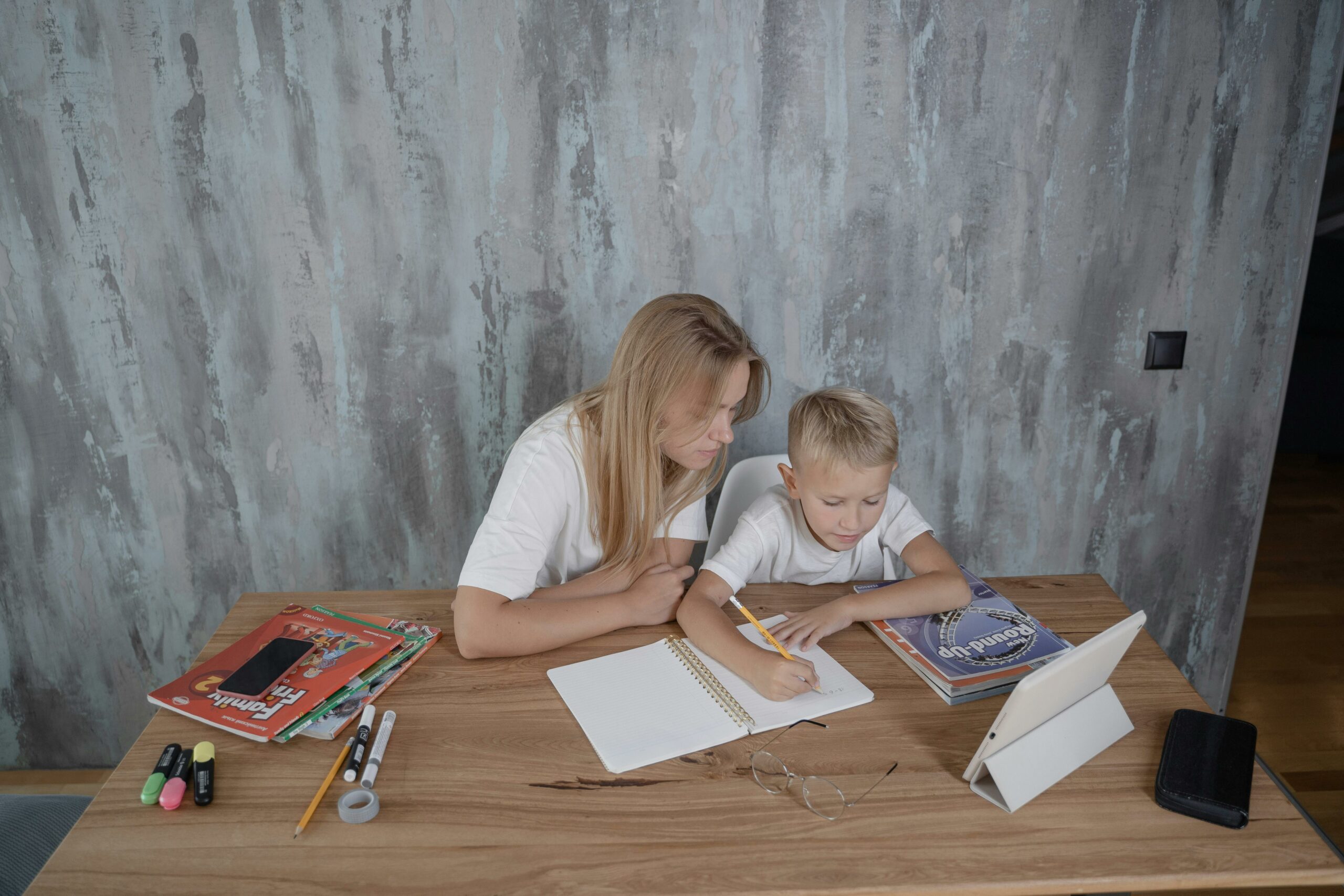
Homework : How Much Is Too Much, How to Organise It, and When to Worry ?
Every parent has been there. It’s 7pm, dinner is half-cold on the table, and your child is still hunched over a maths worksheet with that particular look of quiet misery that only homework can produce. You’re wondering whether this is normal, whether you should be helping more, whether the school is asking too much – or not enough.
No Easy Answers – But Plenty of Useful Ones

These are genuinely good questions. And they don’t have simple universal answers, because a lot depends on your child’s age, their school, and their particular way of learning. For families who want to go deeper on the relationship between home and school learning, https://ecoleapprivoisee.com/ explores these themes in a thoughtful and grounded way – worth a look if you’re navigating this stuff regularly. But for the immediate, practical questions most parents are asking, here’s what actually matters.
How Much Homework Is Normal at Each Age ?
Let’s start with something concrete. There are rough guidelines – not legally binding rules, but widely accepted benchmarks – for how long homework should reasonably take at different stages of schooling.
Primary school (ages 6–10): In many countries, formal written homework is actually discouraged at this age. In France, for example, written homework is officially banned in primary school, though reading is encouraged. In the UK and US, 10 to 20 minutes per evening is considered reasonable for younger primary pupils.
Middle school / collège (ages 11–14): Around 45 minutes to an hour per evening is a sensible benchmark. This can vary depending on the day and what’s coming up, but if your child is consistently spending two hours or more, something is off – either the workload is too heavy, or there’s an underlying difficulty worth looking at.
Secondary school / lycée (ages 15–18): An hour to two hours per evening becomes more realistic, especially in exam years. Sixth form or terminal year students can legitimately spend more time on independent study. That’s expected. But again, there’s a ceiling – beyond three hours most evenings, the returns diminish and the stress costs outweigh the benefits.
I find that a lot of parents are surprised when I say this. They assume more homework means better outcomes. The research doesn’t really support that, especially at younger ages.
The Organisation Question : A Routine Makes Everything Easier

Here’s the thing about homework battles : they’re almost always worse when there’s no routine. When homework happens at random times, after screen time, when everyone’s tired – that’s when the tears happen. And the arguments.
A few things that genuinely help :
A consistent time slot. Not necessarily immediately after school – some children need 30 to 45 minutes to decompress first. But the same time each day removes the negotiation entirely. It’s just what happens at 4:30, same as brushing teeth before bed.
A dedicated space. It doesn’t need to be fancy. A clear surface, good light, and ideally somewhere a bit separate from the main action of the house. Some children actually work better at the kitchen table where there’s background presence – perso I think this varies enormously by child and it’s worth experimenting.
No screens during homework time. This sounds obvious but it’s surprisingly hard to enforce, especially with older children whose homework is actually done on a computer. The phone, though, should be out of reach. The research on this is pretty clear – notifications fragment attention, and fragmenting attention makes everything take longer and stick less well.
Starting with something manageable. Not necessarily the easiest task, but something they can get into. Getting started is often the hardest part. Once they’re in motion, momentum helps.
How Involved Should You Be ?
This is where a lot of parents get themselves tied in knots. Too much involvement and you’re doing the homework for them. Too little and they feel abandoned.
The honest answer : your role is to support the process, not to provide the answers.
That means being available to answer questions, but asking “what do you think ?” before jumping in. It means checking that they understand the task before they start, not after they’ve spent 20 minutes going in completely the wrong direction. It means noticing when frustration has crossed into genuine distress – and responding to that differently than you’d respond to ordinary reluctance.
What it doesn’t mean is sitting next to them correcting every mistake in real time. That’s exhausting for you, and it robs them of the productive struggle that’s actually where the learning happens.
When Should You Actually Be Worried ?

Most homework stress is normal. A bit of resistance, some complaints about boredom or difficulty – that’s just Tuesday. But there are signals worth taking more seriously.
Consistent avoidance over weeks. If your child is finding every possible reason not to start, every single evening, for weeks on end, something is going on. It might be anxiety, it might be an unidentified learning difficulty, it might be a social problem at school. The avoidance is rarely actually about the homework.
Homework taking much longer than it should. If a task that should take 20 minutes is regularly taking 90, that’s worth paying attention to. Either the school is setting too much, or there’s a processing issue that deserves a proper look.
Physical symptoms around homework time. Headaches, stomach aches, tearfulness that seems disproportionate. Kids often somatise anxiety. If your child regularly feels ill specifically when it’s time to sit down and work, that’s a flag.
A sudden drop in effort or quality. If a child who usually manages homework reasonably well suddenly stops engaging, that’s a change worth noting. Something may have shifted – socially, emotionally, or in terms of their confidence in a particular subject.
In all of these cases, the first step is a calm conversation with your child. Not an interrogation, just genuine curiosity. And if that doesn’t shed light, talking to the class teacher early is almost always better than waiting.
A Note on Children Who Seem to Have No Homework
Sometimes parents worry in the opposite direction : their child claims to have no homework, ever, and they’re not sure whether to believe them or whether the school simply doesn’t set much.
Both are possible. Some schools – particularly progressive or alternative schools – deliberately limit formal homework in favour of reading and play-based learning. That’s a legitimate pedagogical choice, not a sign that nothing is happening.
If you’re genuinely unsure, check in with the teacher directly. Most are happy to clarify what they expect to come home and how parents can support learning without formal assignments.
The Bigger Picture

Homework is a means to an end. It’s supposed to reinforce learning, build habits of independent work, and prepare children for the greater demands that come later. When it’s doing that – even imperfectly – it’s working.
When it’s consistently causing misery, damaging your relationship with your child, or consuming every evening with no apparent benefit, something needs to change. That might mean a conversation with the school. It might mean a different approach to how you manage it at home. It might mean getting some outside support.
The goal isn’t a perfectly completed homework diary. It’s a child who can sit with a challenge, work through it, and feel capable at the end.
That’s worth protecting.

Leave a Reply